# Advice for Teaching through the 2020 US Elections
Sort We wrote this guidance and compiled these resources in October 2020, before the November presidential elections. Apart from the specific dates on the November 2020 calendar, much of the guidance remains relevant as we continue to navigate challenging times.
We find ourselves in the midst of a heated election season, with much at stake on the ballot. As we think about how the outcome may affect our communities and world, we are reminded of the profound importance of [our mission](https://college.harvard.edu/about/mission-vision-history#mission). As you plan your teaching in the coming weeks, you may wish to use class time, office hours, or other forums to create a space for students to process their reactions to current events, as well as to connect your discipline with relevant issues.
We have designed these resources to help faculty and graduate student instructors think about how to approach the events of November, given your own goals and your particular course and discipline. We offer questions and ideas to consider in your planning, as well as advice from faculty colleagues. Through our teaching and scholarship, we can work collectively with our students to chart productive paths forward.
Sort Jump to...
[Familiarize yourself with the November calendar](#calendar)
[Consult with your teaching team](#teachingteam)
[Consult with your students](#students)
[Make a plan](#plan)
[Other resources for faculty and PhD students](#resources)
### Image credits
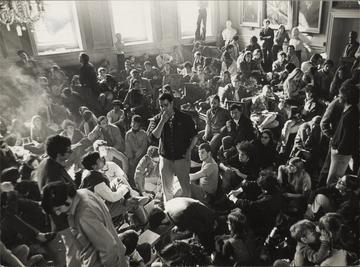
[\[Protesters inside University Hall during Takeover at Harvard, Photograph\]. (n.d.)](https://images.hollis.harvard.edu/permalink/f/17kvbo1/HVD_VIAolvwork724078).
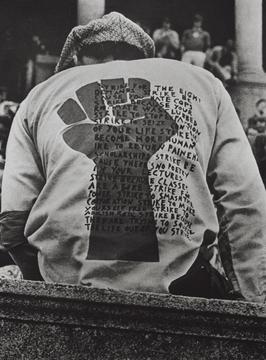
[Harvard University. Office of News Public Affairs., H. (n.d.). \[Protester Wearing "8 Demands" Shirt, Photograph\]](https://images.hollis.harvard.edu/permalink/f/17kvbo1/HVD_VIAolvwork724086).
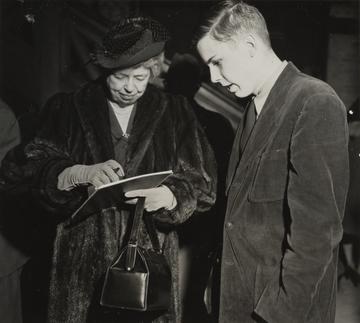
[Harvard University. Office of News Public Affairs., H. (1950). \[Mrs. Roosevelt Signs an Autograph after Talking about the U.N. at Sanders Theatre, Photograph\], 2-8-1950](https://images.hollis.harvard.edu/permalink/f/17kvbo1/HVD_VIAolvwork403146).
## Familiarize yourself with the November calendar
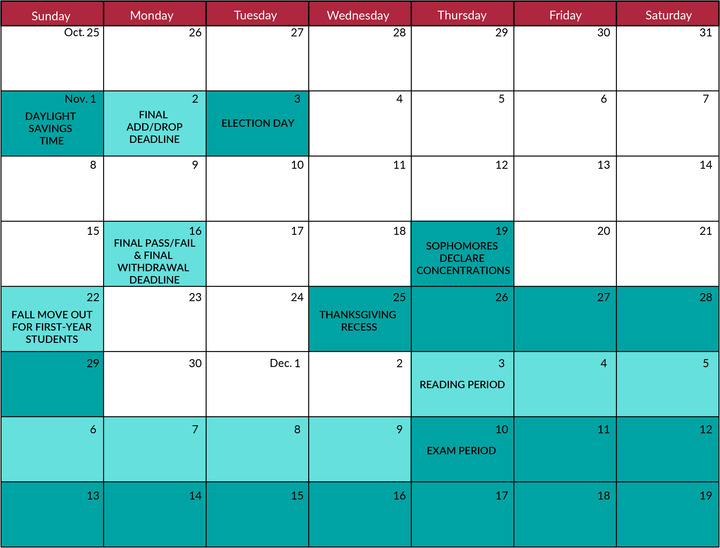
While the US elections and the pandemic obviously loom large in our minds, they are not the only events that may affect students’ ability to manage their coursework during the final month of classes. We suggest that you familiarize yourself with the November calendar more generally before you contemplate how you might adjust aspects of your course in response to the stresses that students may experience surrounding the election in particular. **NB:** [See an updated calendar for November 2022](https://docs.google.com/presentation/d/1IhTSsKVbSKxWcnRmqxXIfy2TQnb53OKfRMs_mfgGpCA/edit?usp=sharing)
## Consult with your teaching team
Given the number of important events happening in November, how can you and your teaching team respond? Start by asking these questions:- How are major, and potentially disruptive, events like the pandemic and the US elections connected to the goals and content of my course and/or my discipline?
- How might these events be connected to the experiences and identities of my students—and of my TFs and colleagues?
- What should I/we do as the teaching staff of my/our course?
While everyone, understandably, is thinking about how the election may affect *students* already under stress from the pandemic and the unfamiliar demands of remote learning, it is important to remember that we, too, as *instructors* are experiencing these same stressors in our own lives. We encourage you to include all of the members of your teaching team—be they your Teaching Fellows in a large lecture course, or faculty colleagues teaching in the same area of your department—as you consider how you might make adjustments to your course in the final month of the term.
- Consult our advice on [TFs & Teaching Teams](/teaching-teams).
- Graduate students who need additional support are encouraged to [contact Danielle Farrell](https://gsasstuserv.youcanbook.me/), Harvard Griffin GSAS Director of Student Services.
## Consult with your students
It is likely that many students will want or need a space to process the experience of the election (as well as the other milestones happening in November). Yet it is also likely that students will have different preferences about how or where that happens. In some courses, it may make sense for the instructor and the students to lean into current events, and incorporate discussions of the election into class activities. Some students may want space in class to process and discuss current events. Other students, however, may find their academic work to be a welcome break from the stress of the current news cycle. Rather than make assumptions about the best response, we encourage you to check in with your students about their experience and their preferences for the last month of the term.- There are many ways to check in with students, whether you ask directly, do some small group discussions in class and have students share out, or have students fill out a quick Google form at the end of class, like a minute paper.
- Mid-semester is a great time to collect early feedback on how the course is going in any case, to have a chance to revisit course goals and expectations and make sure instructors and students are on the same page. You can read more of our advice on collecting [early feedback](/early-or-midterm-feedback).
- It may be a good idea to solicit specific feedback on how students are experiencing the election and other November events. We have designed a [sample form](https://docs.google.com/document/d/1Vs0UDjkGbFUH461rFLD3HEohzmQi6zXaOHNcHE5oEYs/edit?usp=sharing) that interested instructors may adapt to their own courses and contexts. ([Click here](https://docs.google.com/document/d/1Vs0UDjkGbFUH461rFLD3HEohzmQi6zXaOHNcHE5oEYs/copy) to make your own copy.)
Once students share their thoughts, it will be important to respond to them, to share what will be possible (or not) and why, and explain your plan so that students feel heard. If the feedback shows that students need more resources, or you are in any way concerned about the responses you receive, seek help and connect with other campus resources, starting with our [Bok Guide to Supporting Students](/files/bok_guide_undergraduate_resources.pdf).
## Make a plan
Once you have a better sense of how you may want to adapt your course, and of the experiences and preferences of your students, you can make a plan for the final month of the term. There is, we should emphasize, no such thing as the “perfect” plan; what matters is that you have the opportunity to make choices that feel intentional to you and to your students.### Will you make space in your synchronous class sessions to address current events directly?
It's normal to feel some anxiety about whether you're prepared for potentially difficult conversations about the election (and attendant issues like the stresses and structural inequalities of the pandemic, or racial injustice). Yet if you and your students have created some [shared norms and practices](/group-agreements) that allow you to work through moments of stress and difficulty, they can be some of the most rewarding moments for all involved. Our [resources on inclusive teaching](/inclusive-teaching) include guidance on [how to navigate difficult moments](/navigating-difficult-moments) in the classroom. Remember as well that participation might take many forms—are there ways that students who are more comfortable speaking and listening through alternative modalities can enter the conversation?
### Will you modify your assignments to incorporate current events?
In many courses and many disciplines, one of the most valuable things we can do is offer students scholarly frameworks through which to interrogate and interpret their lived experience. Creating opportunities for students to step back, reflect upon, and analyze the news (and/or their own reactions to it) is, in some sense, part of our job as instructors. At the same time, we suggest that you incorporate flexibility and student choice into any such assignments, as students may be uncomfortable or otherwise unable to share much detail about their politics or their local communities. As one faculty member noted, it is important that students retain the right to privacy with regard to their own beliefs even as we may invite them to adopt various points of view for the sake of understanding them more fully.
### How might you provide flexibility for students immediately following the election?
If you wish to provide students with flexibility regarding course work during the week of election, we suggest that you read the guidance from the Office of Undergraduate Education.
We’ve reached out to some of the many faculty whose courses touch on the topics directly relevant to our public discourse this November to hear how they are approaching these questions.
Why the Election Matters
Types of Intellectual Responses
Teach Enduring Skills
Help Students Manage Stress
Plan for the Event, and Provide a Network of Support
## Other resources for faculty and PhD students
We have also curated advice from around Harvard and beyond for those who would like additional resources.
Recommended readings Graduate Student Support Undergraduate Support International Student Support
## Recommended readings
- Diana Hess and Paula McAvoy, *[The Political Classroom: Evidence and Ethics in Democratic Education](https://hollis.harvard.edu/primo-explore/fulldisplay?docid=01HVD_ALMA512333226860003941&context=L&vid=HVD2&search_scope=everything&tab=everything&lang=en_US)* (New York: Routledge, 2015).
- [Ideological Conflict in the Classroom: Tools and Tips for Harvard Teaching Fellows](https://drive.google.com/file/d/1BQT5TzKrXXoRyoYg8LcxMENDGBh7brtZ/view?usp=sharing) (Department of Government)
- [Preparing to Teach about the 2020 Election (and After)](https://urldefense.proofpoint.com/v2/url?u=https-3A__crlt.umich.edu_blog_preparing-2Dteach-2Dabout-2D2020-2Delection-2Dand-2Dafter&d=DwMFaQ&c=WO-RGvefibhHBZq3fL85hQ&r=QHbG5ps8Ho9s3h_4lRC9G8nYJ6ENLLMdyrc8iBxmnsk&m=egboFtXdgBk-kgmwbuEUKwJXXrRZ3R-rpMC_Gb8Spy0&s=9XvrRvpZN6aZIuDF61bZvGQmiMEO-s5H4N7fFW7FgEQ&e=) (University of Michigan)
- [Structuring Classroom Discussions about the 2020 Election](https://crlt.umich.edu/blog/structuring-classroom-discussions-about-2020-election) (University of Michigan)
- [Teaching in Times of Strife and Trauma](https://docs.google.com/document/d/1VXRzDpNOri7JAGyqNv_AFMhCGCEM7NS54yPX0eCgxa4/edit): Curated Resources with Actionable Ideas (Harvard Graduate School of Education)
- [ACT to Sustain Learning](https://ctl.stanford.edu/act-sustain-learning-through-current-events) (Stanford University)
- [Teaching in Turbulent Times Toolkit](https://blogs.uoregon.edu/keepteaching/teaching-in-turbulent-times-toolkit/) and [Teaching and the Election](https://blogs.uoregon.edu/keepteaching/2020/10/20/teaching-and-the-election/) (University of Oregon)
- Cathy Davidson, “[The Single Most Essential Requirement in Designing a Fall Online Course](https://teaching-learning.hastac.hcommons.org/2020/05/11/the-single-most-essential-requirement-in-designing-a-fall-online-course/)” (HASTAC.org)
- [Resources for Supporting Our Campuses in Politically Fraught Times](https://docs.google.com/document/d/1QZVCF6bMDl5av-v-3E-7nhi8EUjLw6H5a4oOdXUuRG4/edit) (Professional and Organizational Developers’ \[POD\] Network)
- Beth McMurtrie, "[Can Colleges Prepare Students for the Election and Its Aftermath?](https://www.chronicle.com/newsletter/teaching/2020-10-22)" *The Chronicle of Higher Education* (22 October 2020).
- "[What’s at Stake for Higher Ed in the Election?](https://www-chronicle-com.ezp-prod1.hul.harvard.edu/article/whats-at-stake-for-higher-ed-in-the-election)" *The Chronicle of Higher Education* (14 October 2020).
- Debra Mashek, "[Avoiding Post-Election Student Unrest](https://www.insidehighered.com/views/2020/10/16/colleges-can-help-students-deal-productively-their-disappointment-and-anger?utm_source=Inside%20Higher%20Ed&utm_campaign=f27826d3d7-DNU_2020_COPY_02&utm_medium=email&utm_term=0_1fcbc04421-f27826d3d7-198582085&mc_cid=f27826d3d7&mc_eid=5c93aab808)," *Inside Higher Ed* (16 October 2020).
## Graduate Student Support
A number of our campus partners are sponsoring events that may be of interest to graduate students:
- Harvard’s Office for Diversity, Inclusion and Belonging is hosting a [Community Dialogue Series](https://dib.harvard.edu/community-dialogue-series) focused on the election and its surrounding issues.
- Screening and Discussion: [We Came to Heal](https://engage.gsas.harvard.edu/event/6548890)
- The GSAS Student Center is hosting [Escape the Room](https://engage.gsas.harvard.edu/event/6540726)! Step away from media/messaging for an hour to have fun and engage with other grad students!
- The GSAS Office of Diversity and Minority Affairs is hosting a [special election community check-in](https://engage.gsas.harvard.edu/event/6513486).
## Undergraduate Support
Undergraduates can seek support before, during, and after the election from a wide network of advisers and offices. The Harvard College Dean of Students has posted [a list of resources and advice](https://dso.college.harvard.edu/files/dso/files/communications_election_resources_v3.pdf?m=1603484095) for undergraduates.
You might also encourage students to also take advantage of the many [election-related events](https://calendar.college.harvard.edu/search/events?search=election) hosted by offices across the College.
## International Student Support
- "[US election 2020: A really simple guide](https://www.bbc.com/news/election-us-2020-53785985)," *BBC News* (25 September 2020)
- Stephen Yale-Loehr, “[Ballots and Borders: Election 2020 and What’s at Stake for International Students and Scholars](https://youtu.be/W3ewi_0Ph8w),” YouTube
- “['Harvard Has Suffered,' Chief Officer for International Affairs Says of Visa Troubles for International Students](https://www.thecrimson.com/article/2020/10/16/elliott-denounced-dhs-restrictions/),” *The Harvard Crimson* (16 October 2020)